
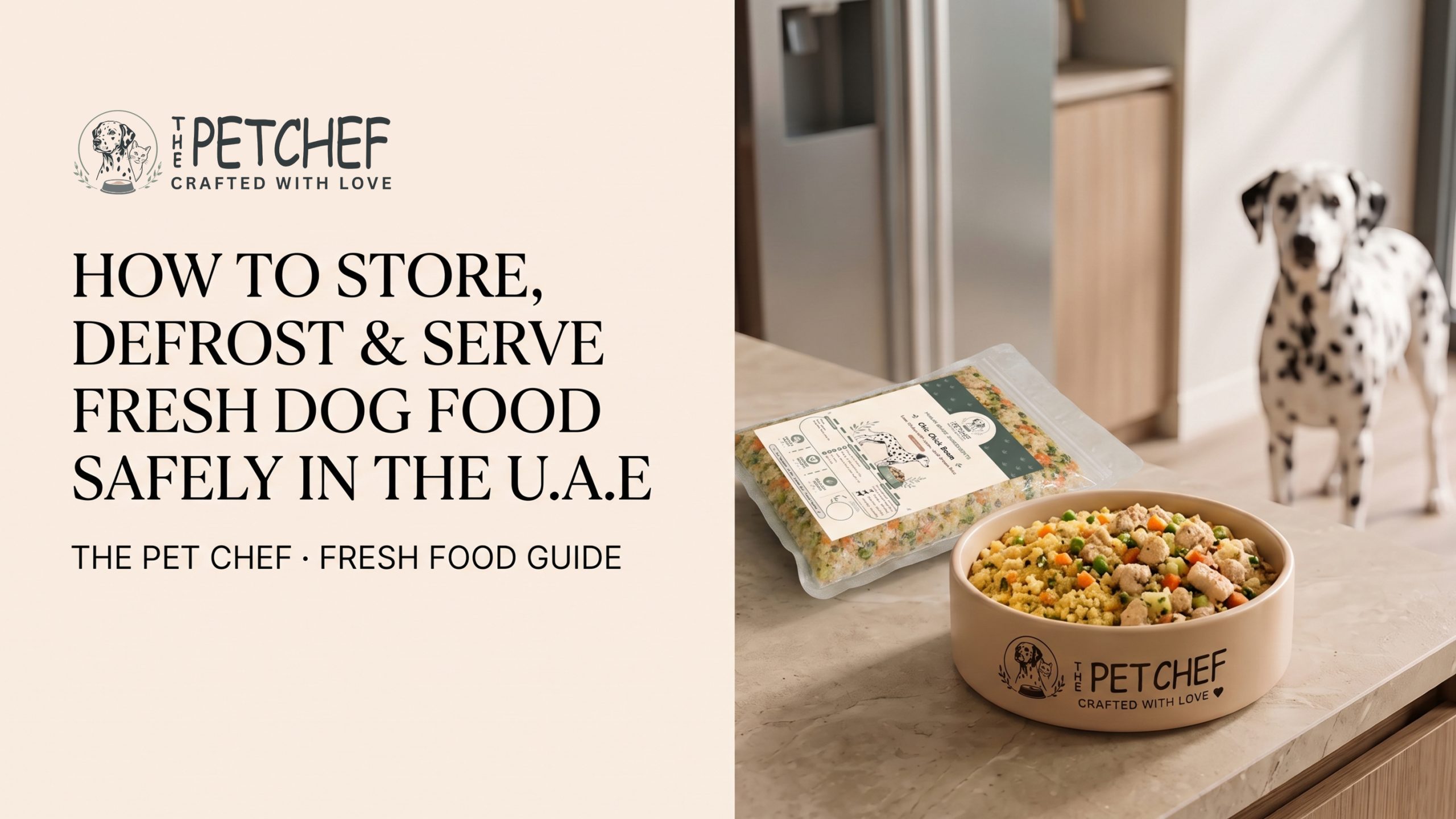
THE SHORT ANSWER
Fresh dog food is not difficult to manage, but it does need a little more attention than opening a bag of dry food. Frozen meals should remain frozen until they are needed, then be defrosted safely in the refrigerator and kept chilled until serving. The storage guidance on the individual pack should always be followed, and clean bowls and utensils matter more than we sometimes realise. Once this becomes part of the household routine, fresh feeding feels far less complicated than it sounds.
Fresh food needs to remain properly chilled, and the simplest routine is usually the best one. Once you get into the habit of moving the following day’s meal into the fridge while serving the current one, most of the planning takes care of itself.
Always check the storage instructions on the pack, the condition of the packaging and anything unusual about the smell, colour or texture of the food. If something does not seem right, it is better not to take a chance.
Make the freezer and fridge part of the feeding routine rather than something you think about at the last minute. A small habit at dinner today can make tomorrow’s feeding almost automatic.
Fresh feeding and the Dubai fridge
Living in Dubai makes you unusually conscious of temperature. We think about how long the groceries have been in the car, whether something chilled has been left on the kitchen counter for too long, or whether the delivery has arrived while nobody is home. Fresh pet food deserves much the same common sense.
The idea of fresh feeding can sometimes sound more complicated than the reality because we tend to imagine endless planning, measuring and remembering. In practice, once the routine settles in, there is very little drama involved. The simplest system is to keep the meals frozen until they are needed, move the next one into the refrigerator in advance, and keep it chilled until it is time to serve.
That one small habit is probably more useful than any complicated storage system. The FDA recommends promptly refrigerating unused refrigerated pet food, keeping refrigerators at 40°F or below, and washing pet bowls and serving utensils after use.
Keep frozen meals frozen until you need them
If a meal has been supplied frozen, it should stay that way until you are ready to start defrosting it. What tends to cause confusion is the half-in, half-out approach: taking something out, allowing it to soften, changing plans and then returning it to the freezer.
It is far easier to give fresh food a regular place in your routine. Keep the main supply in the freezer and only move across what you genuinely expect to use next. For many households, the easiest reminder is dinner itself. When today’s bowl is served, tomorrow’s meal goes into the fridge. There is no alarm to set and no separate job to remember because one action simply follows the other.
Defrosting safely
The refrigerator is the most sensible place to defrost fresh food because the meal remains in a controlled, chilled environment while it softens. How long this takes will depend on the size and shape of the pack, so it is useful to give it enough time rather than trying to rush the process at the last minute. If the centre is still slightly firm when you first check it, that generally means it simply needs longer.
The Pet Chef’s own feeding guidance should remain the final reference for each product, particularly where there may be differences between cooked fresh meals and raw products.
Once defrosted, keep it chilled
A defrosted meal still needs refrigeration until it is served. It should not spend an afternoon sitting on the counter because your dog has decided dinner is apparently negotiable today.
The storage instructions for the individual pack should always be followed. That is one area where consistency matters, so the same guidance should appear on the pack, website, FAQs and feeding instructions.
Does fresh food need to be served cold?
Not necessarily. Some dogs are perfectly happy eating their meal straight from the fridge, while others appear to prefer it closer to room temperature. If the product can be warmed, it should only be warmed gently and according to the serving guidance. The idea is to remove some of the chill rather than cook the food again. Stir it properly and check the temperature before it goes into the bowl.
Raw food should be treated separately and handled according to its own instructions rather than in the same way as a cooked fresh meal.
The bowl matters too
Food safety does not stop once the pack is open. The bowl, spoon and anything else used to serve the food should also be clean. This sounds obvious, but pet bowls are sometimes treated very differently from the dishes we use ourselves. A bowl can look perfectly clean while still carrying residue from the previous meal.
Hands matter too. Wash them before and after handling pet food, especially if raw products are involved. The FDA notes that raw pet food can carry harmful bacteria such as Salmonella and Listeria, which is why hygiene becomes especially important with raw diets.
When not to serve a meal
Most of us know when something in our own fridge does not look right. Pet food deserves the same instinct. Do not serve a meal if the packaging is swollen, leaking or damaged, the seal has been compromised, the food has clearly not been stored correctly, or the smell, colour or texture is noticeably different from usual. If you genuinely do not know how long a fresh meal has been left out, it is safer to discard it than to guess.
A small routine makes the difference
Fresh feeding often seems like more work before you begin because you are thinking about every step separately. Then it becomes part of the rhythm of the household and you stop noticing most of it. The freezer opens, the next meal moves to the fridge, the bowl gets washed, and dinner happens.
Your dog, fortunately, does not need to know anything about food safety, refrigerator temperatures or planning ahead. They only need to recognise the sound of the fridge door.
Further reading
FDA: Proper Storage of Pet Food & Treats: https://www.fda.gov/animal-veterinary/animal-health-literacy/proper-storage-pet-food-treats
FDA: Tips for Safe Handling of Pet Food and Treats: https://www.fda.gov/animal-veterinary/animal-health-literacy/tips-safe-handling-pet-food-and-treats
CONTINUE LEARNING